In our last blog-post, we gave you the basic definition of what cloud computing is, but the term has really come to mean so much more than just hosting virtual machines. Another term that’s been used more and more with the rise of cloud computing is X as a Service. Here, the X can stand for a lot of different things. There are 3 basic kinds of services such as:
- Infrastructure as a Service (IaaS),
- Platform as a Service (PaaS), and
- Software as a Service(SaaS)
Infrastructure as a Service
The way we’ve described the cloud so far would probably best be defined as Infrastructure as a Service or IaaS. The idea behind infrastructure as a service is that you shouldn’t have to worry about building your own network or your own servers. You just pay someone else to provide you with that service. Recently, we’ve seen the definition of the cloud expand well beyond infrastructure as a service.
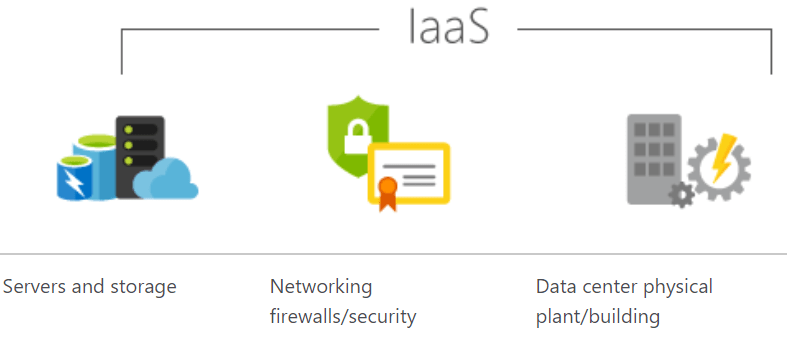
IaaS is a cloud computing model where virtualized infrastructure is offered to, and managed for, businesses by external cloud providers. With IaaS, companies can outsource for storages, servers, data center space and cloud networking components connected through the internet, offering similar functionality as that of an on-premises infrastructure. Some examples of the wide usage of IaaS are automated, policy-driven operations such as backup, recovery, monitoring, clustering, internal networking, website hosting, etc.
The service provider is responsible for building the servers and storage, networking firewalls/ security, and the physical data center. Some key players offering IaaS are Amazon EC2, Microsoft Azure, Google Cloud Platform, GoGrid, Rackspace, DigitalOcean among others.
Platform as a Service
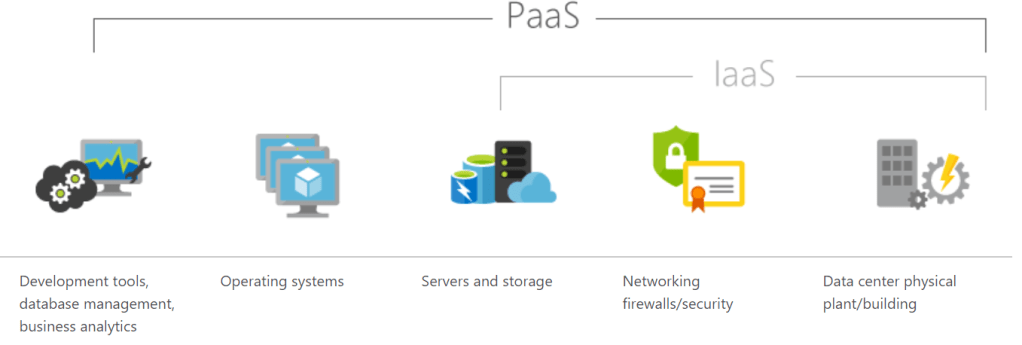
Platform as a Service is a subset of cloud computing where a platform is provided for customers to run their services. This basically means that an execution engine is provided for whatever software someone wants to run. A web developer writing a new application doesn’t really need an entire server complete with a complex file system, dedicated resources, and all these other things. It doesn’t matter if this server is virtual or not. They really just need an environment that their web app can run in. That is what platform as a service provides.
PaaS builds on IaaS. Here, cloud vendors deliver computing resources, both cloud software and hardware infrastructure components like middleware and operating systems, required to develop and test applications. The PaaS environment enables cloud users (accessing them via a webpage) to install and host data sets, development tools and business analytics applications, apart from building and maintaining necessary hardware. Some key players offering PaaS are Bluemix, CloudBees, Salesforce.com, Google App Engine, Heroku, AWS, Microsoft Azure, OpenShift, Oracle Cloud, SAP and OpenShift.
Software as a Service
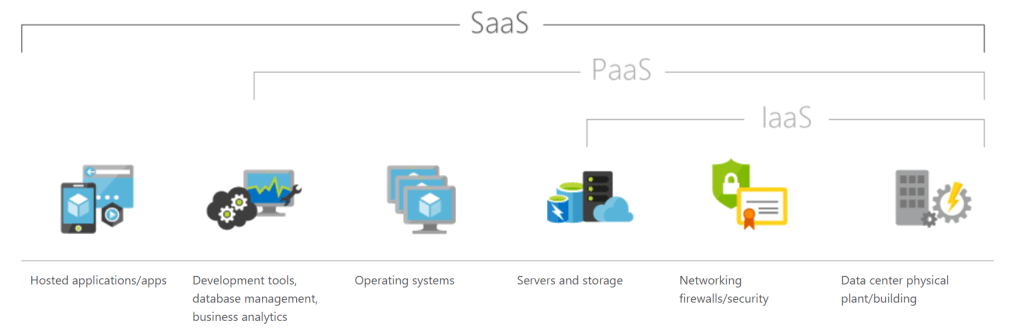
Software as a Service (SaaS) takes this one step further. Infrastructure as a Service (IaaS) abstracts away the physical infrastructure you need and Platform as a Service (PaaS) abstracts away the server instances you need. Software as a service is essentially a way of licensing the use of software to others while keeping that software centrally hosted and managed. Software as a service has become really popular for certain things. Here, the cloud service provider delivers the entire software suite as a pay-per-use model. SaaS lets users easily access software applications — such as emails — over the internet. Most common examples of SaaS are Microsoft Office 360, AppDynamics, Adobe Creative Cloud, Google G Suite, Zoho, Salesforce, Marketo, Oracle CRM, Pardot Marketing Automation, and SAP Business ByDesign.
Current Status
Using one of those services means you’re trusting Google or Microsoft to handle just about everything about your email service. Software as a service is a model that’s gaining a ton of traction. Web browsers have become so feature packed that lots of things that required standalone software in the past can now run well inside of a browser. And if you can run something in a browser, it’s a prime candidate for SaaS. Today, you can find everything from word processors to graphic design programs to human resource management solutions offered under a subscription based SaaS model. More and more, the point of a business’ network is just to provide an internet connection to access different software or data in the cloud.
Services in one Graphic
I’m so glad the example is based on pizza
P.S: I will try to highlight every “Pizza” from here, so that I won’t remain the only one who’s craving for it 🙂
The Pizza-as-a-Service metaphor was firstly introduced by Albert Barron in 2014 as a visualization of the differences between Infrastructure-as-a-service (IaaS), Platform-as-a-service (PaaS) and Software-as-a-service (SaaS). At first sight it looks brilliant — but if you look in depth, it falls apart. This diagram wants to illustrate that you need to do less and less, but the items that are listed and increasingly “outsourced” don’t fit the comparison. I’ll look at the services in the original diagram and suggest a better comparison for people who want to choose which services to use.
A Good visualization of a False concept


The basic concept is in each case you get a pizza, though in some cases, you do all of the work; in other cases you have other people do the work for you.
- Traditional On-Premises Deployment: Made at Home
- Infrastructure-as-a-Service: Take and Bake
- Platform-as-a-Service: Pizza Delivery
- Software-as-a-Service: Dining out
In the diagram, the amount of work you do is in the following order:
Made at home –> Take and bake –> Pizza delivery –> Dining out
Let’s focus on two stages first: if “Traditional On-Premises Deployment = Made at home”, why does “Infrastructure-as-a-Service = Take and bake”?
At first glance, it means that the service provider gives you a pre-made pizza, so you can bake it in your own kitchen without making a mess. However, this is not how Infrastructure-as-a-Service differs from Traditional On-Premises Deployment.
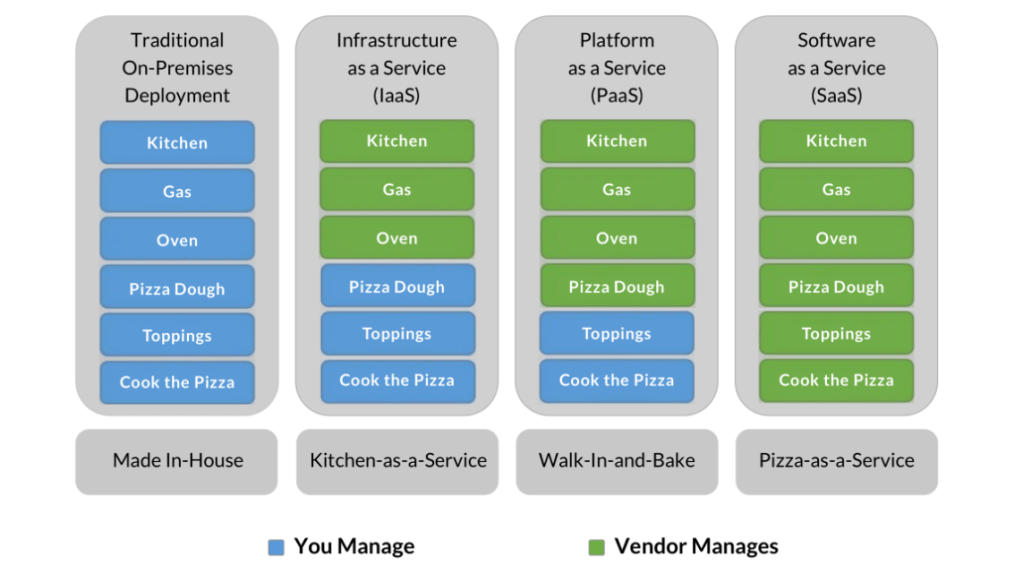
Rather than thinking of the consumer doing less and less, let’s think about a product that is increasingly customizable because less is pre-made by the service provider.
By adopting an X-aaS, you don’t need to worry about a certain “X” — be it infrastructure, platform, software or pizza. Instead of forcing the X-aaS model into existing pizza services, I will be dissecting the steps to making an increasingly customized pizza.
Enjoy your packaged meal: Pizza-as-a-Service.
Pizza-as-a-Service means you can enjoy a pizza (a fully finished product) upon order. You call the pizza delivery so the pizza is already designed, prepared and baked by somebody else and arrives hot and ready to eat.
In the world of SaaS, we only need to sign up to use the service. We can customize some features, layouts, or users (pizza toppings), but we never need to worry about the deployment and framework the project is used (just like how the service providers put our orders together for us). It also means we can’t choose this brand of cheese over that, or how long they choose to bake it for. If you don’t like their crust, you’ll have to choose another company.
So what should be the service layer right below Pizza-as-a-Sevice?
Semi-customized: Ready-to-cook.
The idea of “take-and-take” in the original diagram was close, but it misses a few key ideas. The take-and-bake doesn’t allow customization, which is what IaaS and PaaS offer. IaaS and PaaS take care of some back-end things you don’t want to deal with, and probably come with API’s, but you choose what you can add.
Instead of a “take-and-bake”, the next level down is more like walking into a kitchen with a ready-to-cook package of ingredients. IaaS and PaaS are when you want to make your own pizza, but you don’t need to worry about buying ingredients, prep work, or having the right tools. You can focus on rolling out the dough, assembling the pre-washed ingredients to your taste and factors like size and thickness before sticking it into someone’s provided oven.
If you use IaaS or PaaS, you can focus on your own business logic and implement your user interface on a reliable platform. The service provider manages the hosting and hardware technologies for you.
This option might not be suitable for every end-user. At least you need some pizza-making skills to turn the dough into a pizza.
Fully customized: Kitchen-as-a-Service.
Kitchen equipment is infrastructural investment. For engineers, this is where your code runs. It also includes all the infrastructure you need (such as runtime, storage, networking). Without it, your product doesn’t go anywhere, but on the other hand, it doesn’t affect the nature of the product itself.
For a pizza, the next layer below is buying your own ingredients to prepare exactly the pizza you want, with the specific brands you like. But you don’t have to worry about the oven, rolling pin, whether you counter is big enough, or the pizza cutter.
Now, you have absolute control on what pizza you are going to make, but maybe the rental kitchen doesn’t have every type of tool you want.
Fully in-house: Prepare ingredients + cooking equipment from scratch.
For hard core pizza makers — not only will you want to choose all your pizza ingredients and make it from scratch, you will also want complete control of all the tools in your kitchen: the oven that has the exact settings and capabilities you want, the pizza stone many places don’t have, or let your dough sit overnight at the most optimal corner of your fridge. And finally, you can drizzle that homemade chilli oil on top and savor it fresh out of the oven.
You may think that’s overkill — but in real world, sometimes the effort is necessary if you can’t find a service that will let you customize for that one essential deployment setting, such as a firewall configuration or that specific network setting requirements.
— — — — — — — — — — —
Update: Made every “Pizza” as a hyperlink, and you know what will happen on clicking it 😉
Further Reading
- https://www.monitis.com/blog/3-types-of-cloud-computing-services/
- Microsoft Azure Cloud Computing Services
- AWS Cloud Computing Services
- GCP services
Stay tuned for the next blog where we’ll discuss the best Cloud Platform you should
 Techprodezza
2 thoughts on “Everything as a Service”