What if you are only seven steps away from your first ML model?
ML model is a file that is trained to recognize patterns in order to make a immaculate and accurate data prediction. It is a program smartly integrated with a suitable algorithm that will yield you the relevant information from the given data set model.
- Gathering data :You need to understand your data , spend some alone time with it as you will be playing and manipulating it for the rest of your project. It’s essential that you get the essence of the data, how is it significant, what matters in the data at the end of the day. Careful analysis will help you the rest of your way as you will be knowing what you could keep or rather what you could discard. A very important aspect to this is the business understanding that you would be developing with the given data.It will answer questions about the future prospects.

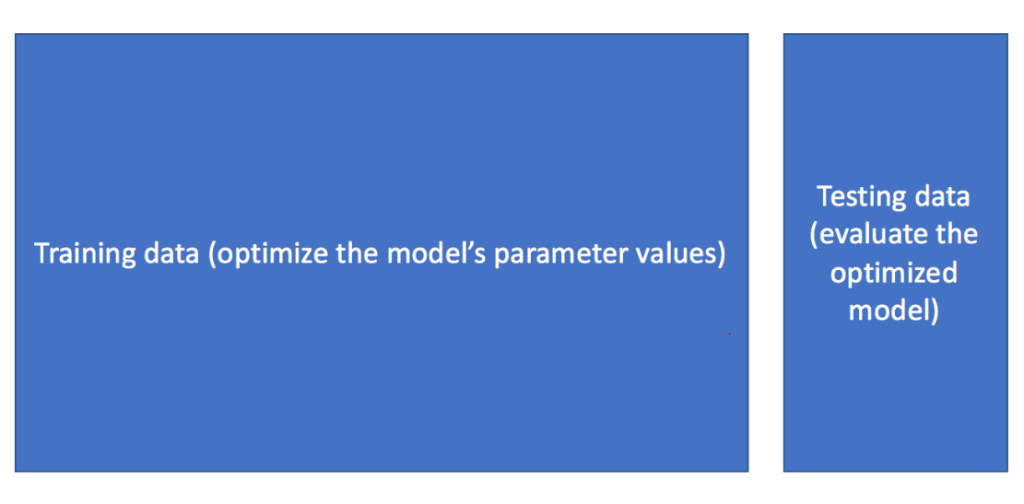
- Data preparation: We need to manipulate correct and organize the randomized data.To be proficient in ML you need to toil and get your hands dirty with the data. It is a step which cannot be skipped in the training days.The end result will be a cleaned sorted data ready to be divided into the training and testing or evaluation data sets respectively in a 80-20 ratio.
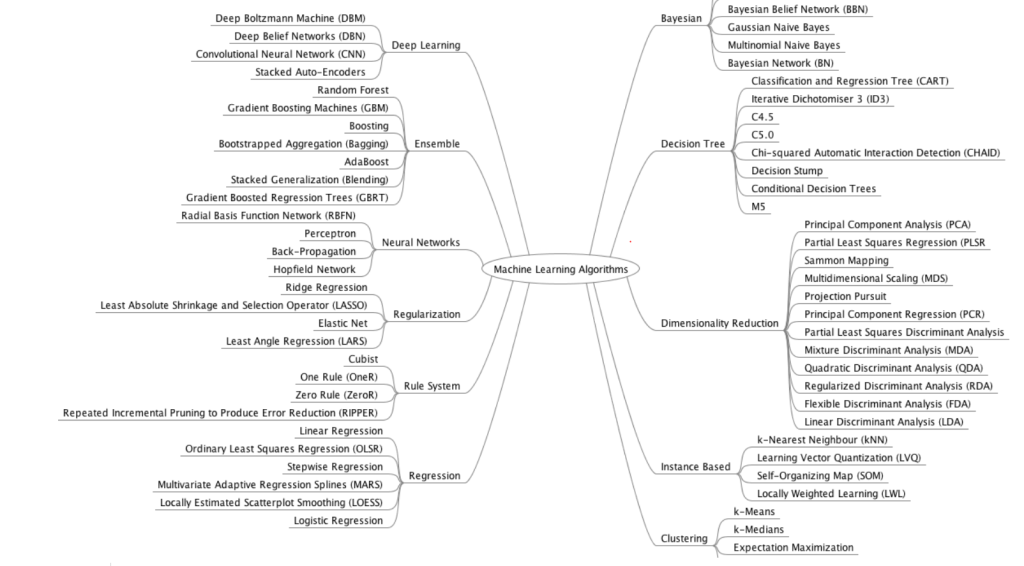
- CHOOSE YOUR ML ALGORITHM : Classification, regression , random forest are some of the designed algorithms for building up your model. We will be discussing this particular topic in depth in the upcoming blog posts but I hope to give you something to hold on or refer to until then.
For in depth study of algorithms, click here.

4. TRAIN : Feed the training data set in your ML algorithm(the learning algorithm) and train it to learn from the data.The training data must contain correct values of target attributes .Plot graph with random values to strengthen up your prediction model and to increase the test cases.
The learning algorithm finds patterns in the training data that map the input data attributes to the target (the answer that you want to predict), and it outputs an ML model that captures these patterns.
You can use the ML model to get predictions on new data for which you do not know the target. For example, let’s say that you want to train an ML model to predict if an email is spam or not spam. You would provide Amazon ML with training data that contains emails for which you know the target (that is, a label that tells whether an email is spam or not spam). Amazon ML would train an ML model by using this data, resulting in a model that attempts to predict whether new email will be spam or not spam.
To train an ML model, you need to specify the following:
- Input training datasource
- Name of the data attribute that contains the target to be predicted
- Required data transformation instructions
- Training parameters to control the learning algorithm
During the training process, ML automatically selects the correct learning algorithm for you, based on the type of target that you specified in the training data source.
5. TEST : Evaluate the newly designed ML model by fitting the testing data set and check model for accuracy and precision. As aforementioned The most basic method to test is the train/test split. The principle is simple, you simply split your data randomly into roughly 70% used for training the model and 30% for testing the model. The benefit of this approach is that we can see how the model reacts to previously unseen data.
6. HYPER PARAMETER TUNING: It is the number of times we update the data set, shift it or work on it to determine the model accuracy and the time taken for doing the same.
Parameters which define the model architecture are referred to as hyperparameters and the process of searching for the ideal model architecture is referred to as hyperparameter tuning.
7. PREDICTION: The last step towards building a ML model is prediction , it signifies how well our model works.
Till then I would like to quote
Hence, this was the overview of the seven steps to building your own ML model we will be discussing them in an insightful way in the upcoming blog posts.
ALL OUR DREAMS CAN COME TRUE IF WE HAVE THE COURAGE TO PURSUE THEM
JUST TO KEEP YOU AND ME GOING ON OUR JOURNEY TO THE UNKNOWN
 Techprodezza